LOVERS & WAR
Fashion conducts its argument about material in documents no one outside the industry reads. The studio's position is that the argument only moves when it is made as art — an object in public reaches people who never asked to be reached, which makes installation the most exposed form conceptualism has. So the demonstration was set at the top of the craft rather than the bottom, in the most emotional garment the discipline produces, on the one day a person is guaranteed to be looked at. A hand-made wedding dress, built from a decommissioned military parachute.
Research produced the precedent rather than the idea. During the Second World War, in Britain under rationing and in occupied Europe, women made wedding dresses from parachute canopies — silk early, nylon later — because coupons were short and the fabric was there. This was not a designer's conceit about reuse. It was a thing people had already done, at the same emotional register, with no alternative available to them.
DESIGN
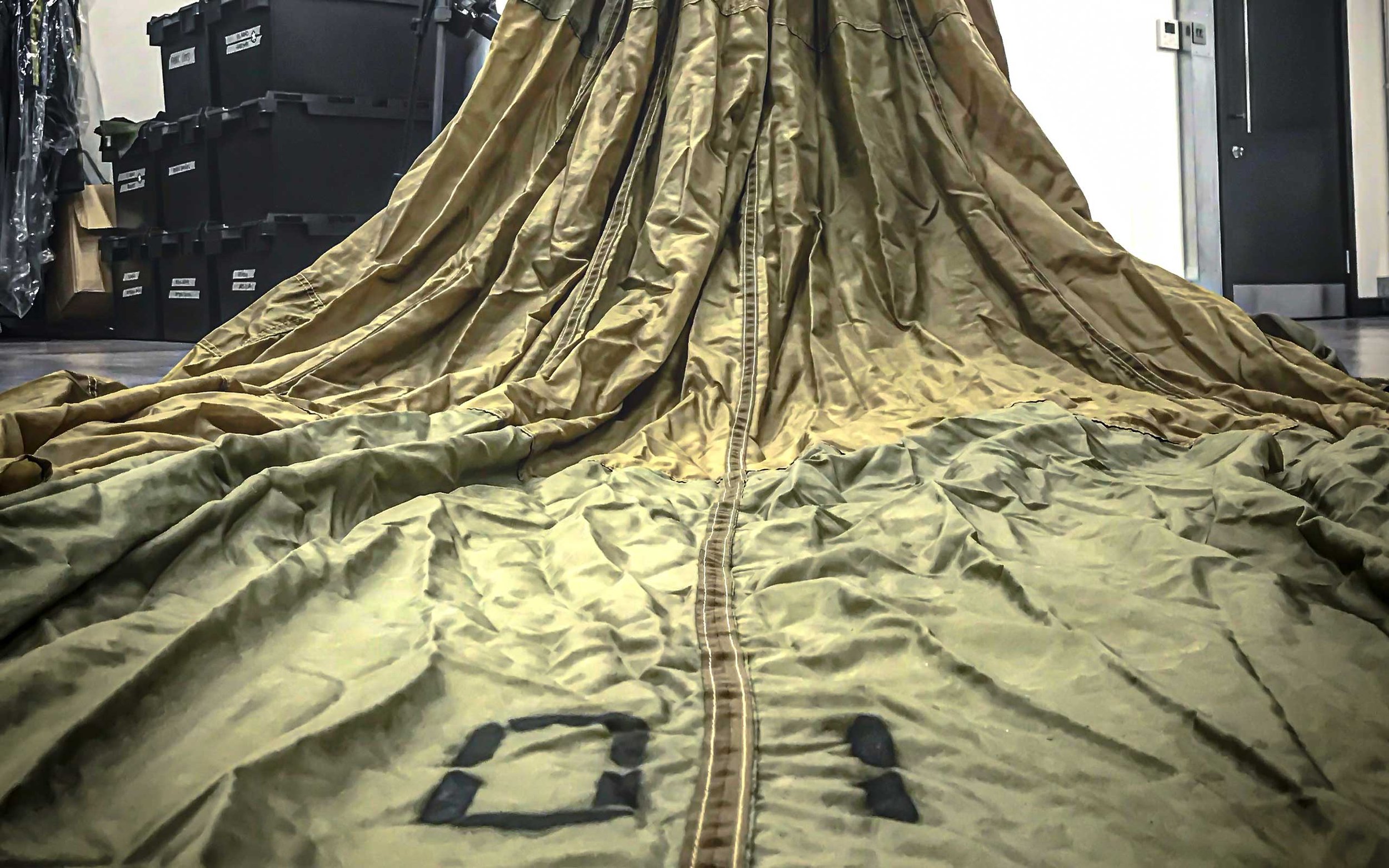
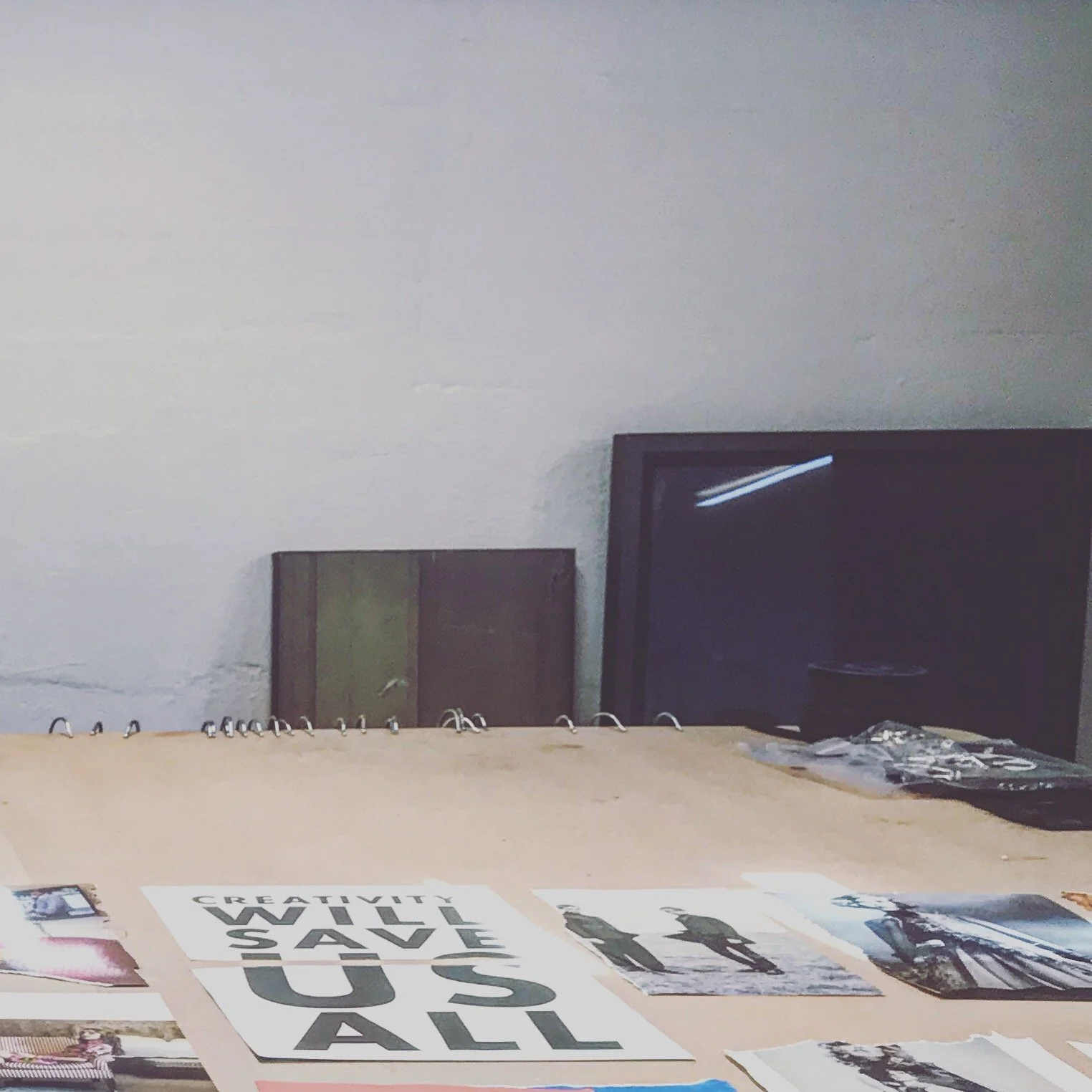
The canopy came from eBay France for fifty pounds. The release mechanism was found second-hand. Neither was chosen for provenance; both were chosen because they were the material at hand, which is the condition the argument depends on. The design was drawn first, on paper, the way any collection begins. It was then taken to an atelier in West London — Margaret, the owner, and Gianni, her protégé, both fluent in subculture and in historical construction — and worked through over two to three weeks. From there it moved to the studio in Kensington and was developed on a live model rather than a stand, because a garment cut from equipment that once held a falling body needs a body to tell you whether it works.
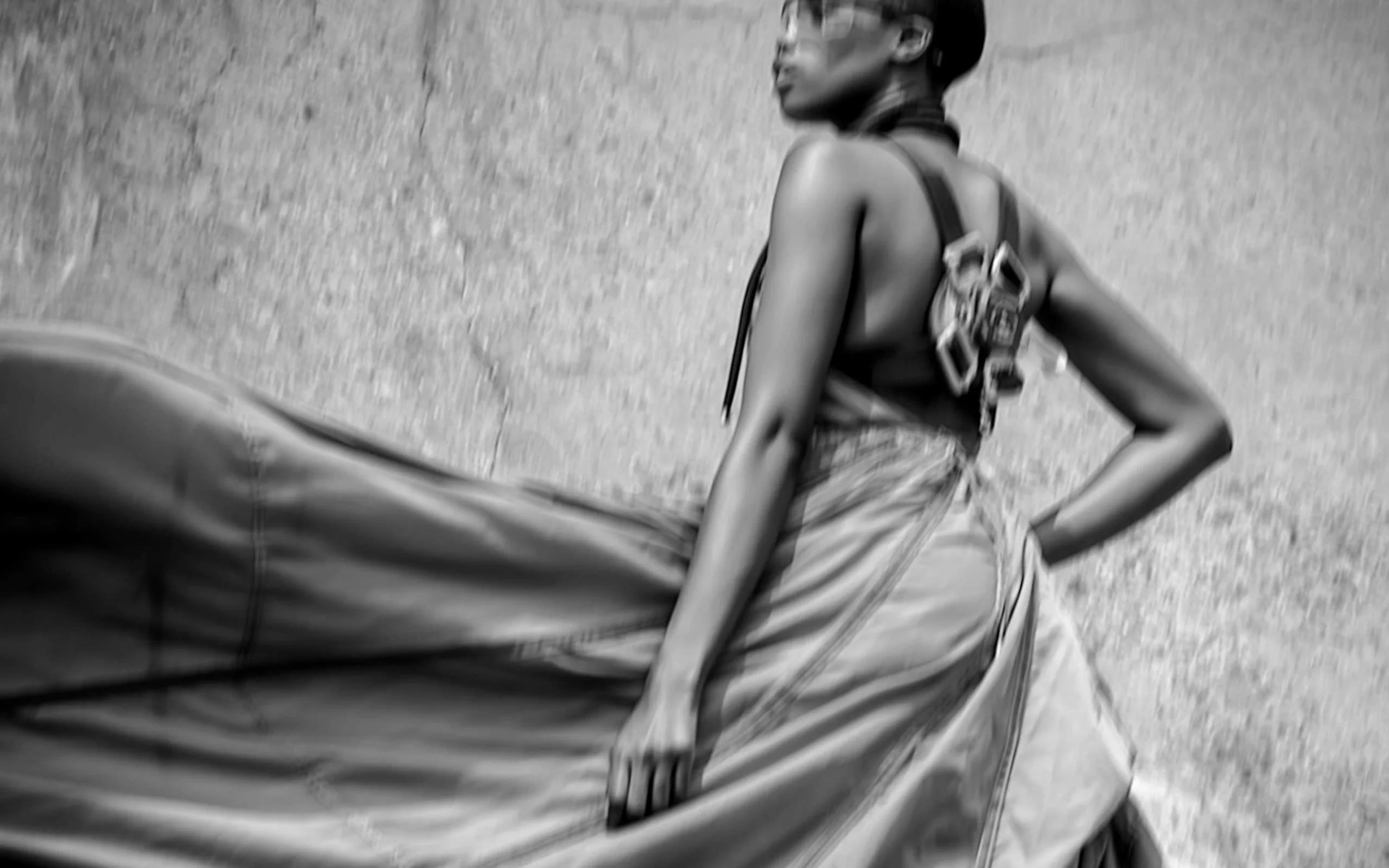
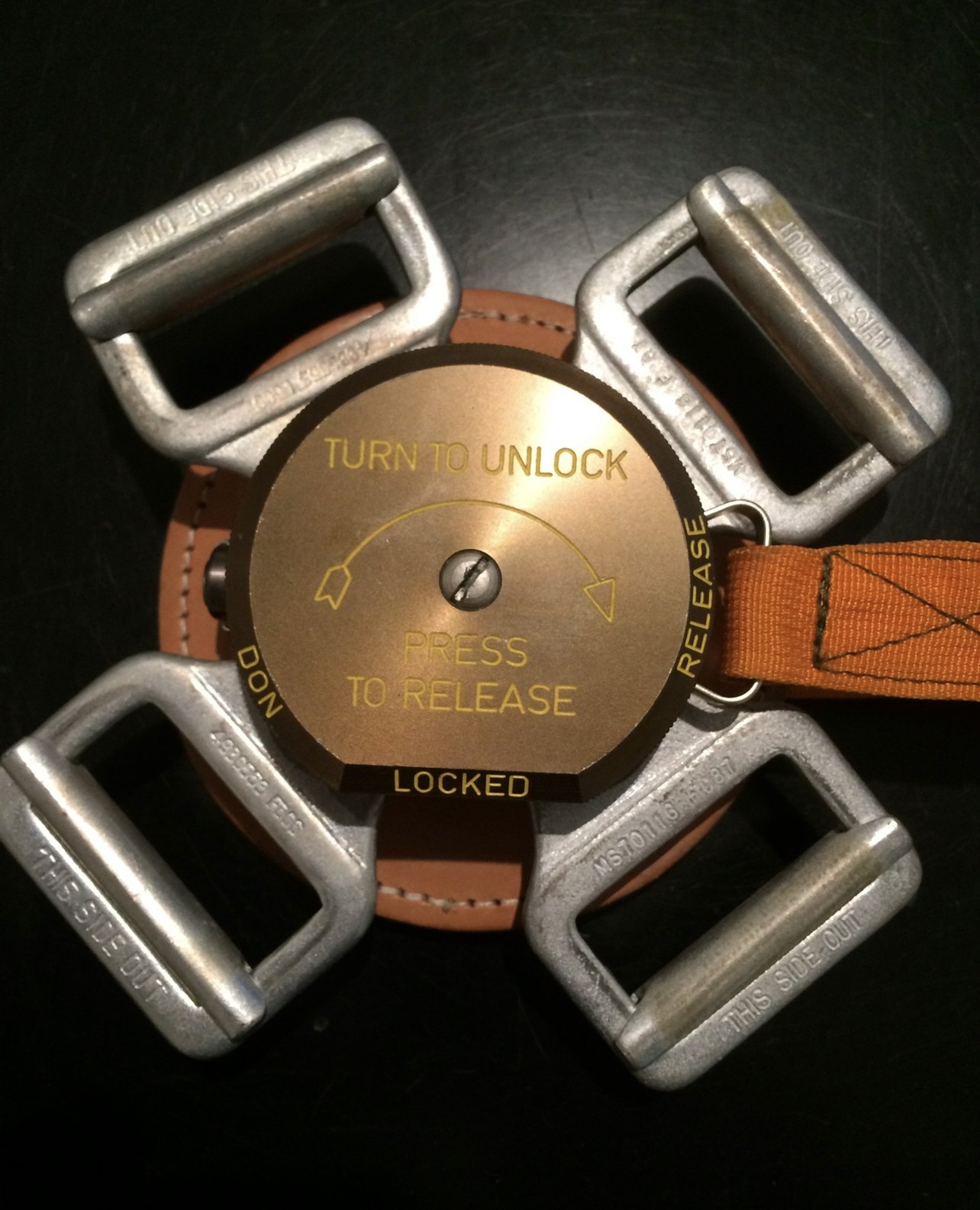
A parachute is built from gores — tapered panels radiating from an apex — which is also how a full skirt is cut, and the lower edge of a canopy is called the skirt in the rigger's own vocabulary. The bodice was taken from a section of the canopy and shortened only slightly, leaving cloth spare rather than cutting to a pattern. The one addition is the quick-release fitted at the back, drawn from the harness rather than from dressmaking.
TECHNOLOGY
The mechanism at the back of the dress is a rotary quick-release box, and it is not anonymous hardware. Each of the four harness adapters is stamped MS70116 — MS for Military Standard, the United States Department of Defense part-numbering series, which means this is American-issue equipment with a specification sheet behind it. Each adapter also carries the instruction THIS SIDE OUT, because a rigger fitting it in a hurry needs to be told. The face is a brass disc. Around its upper edge, TURN TO UNLOCK. Beneath that an engraved arc with an arrowhead at each end, showing the ninety degrees of rotation. Below that, PRESS TO RELEASE. At the base of the disc, in the position a dial reads at rest, one word: LOCKED.
The four harness points have to release together and instantly. Not sequentially, not with two hands, often in darkness. So the sequence is deliberately two-stage — turn, then press.
INSTALLATION
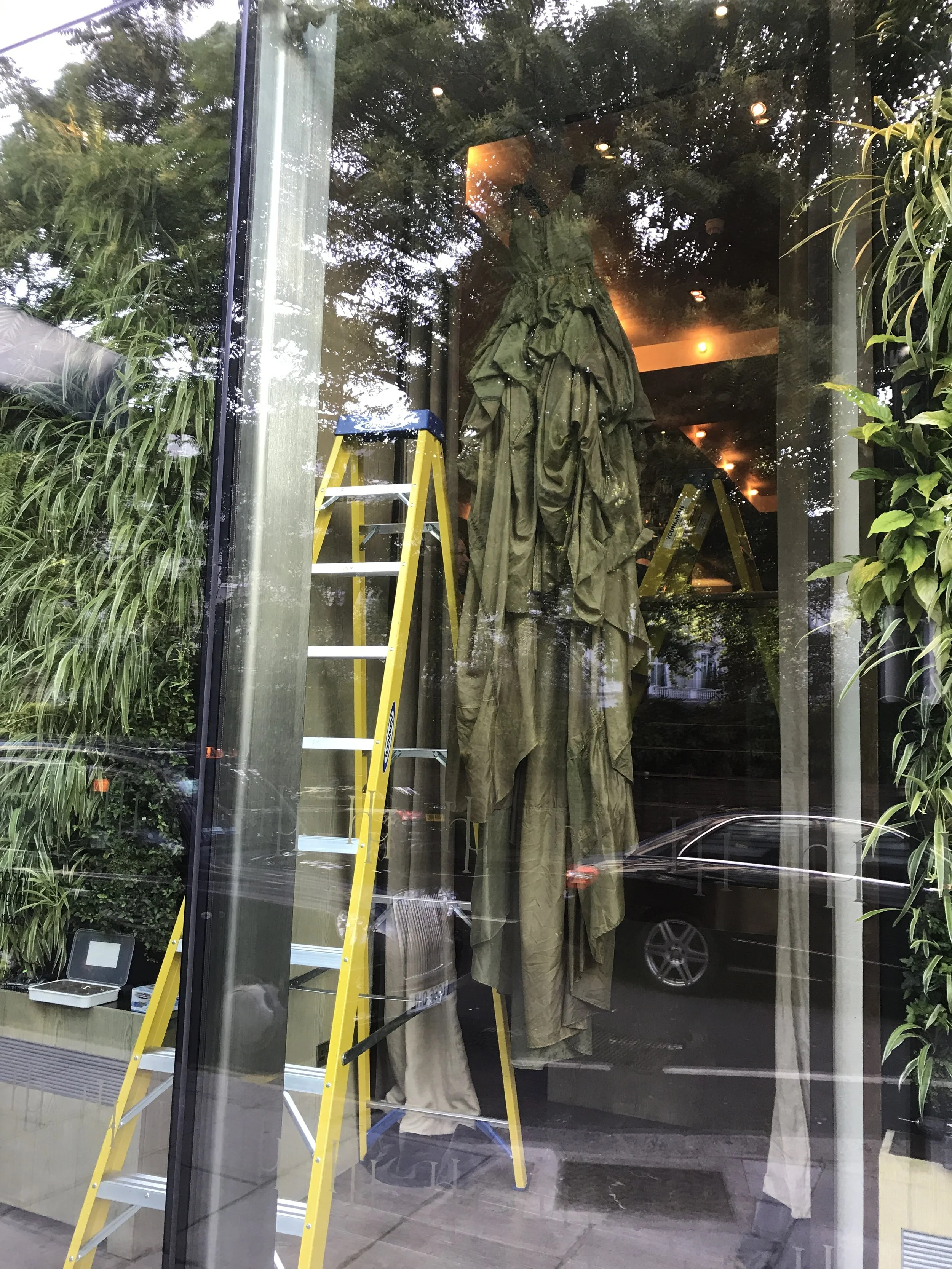
The work opened the Hari Hotel's 2018 summer exhibition in Belgravia, sited in the glass frontage rather than inside the building. That set the audience as the street. Public frontage removes the self-selection that governs gallery attendance: the viewer has not chosen the encounter, and the work is read by people with no prior interest in either textile waste or conceptual fashion.
The body is wire, formed over a mannequin and withdrawn from inside it, leaving the dimensions of a person as an outline. It was suspended from above, clear of the floor, and a fan was run on the fabric for the duration. Both decisions return the canopy to its working condition: a parachute on the ground is inert material, and functions only when airborne, loaded, with air passing through it.
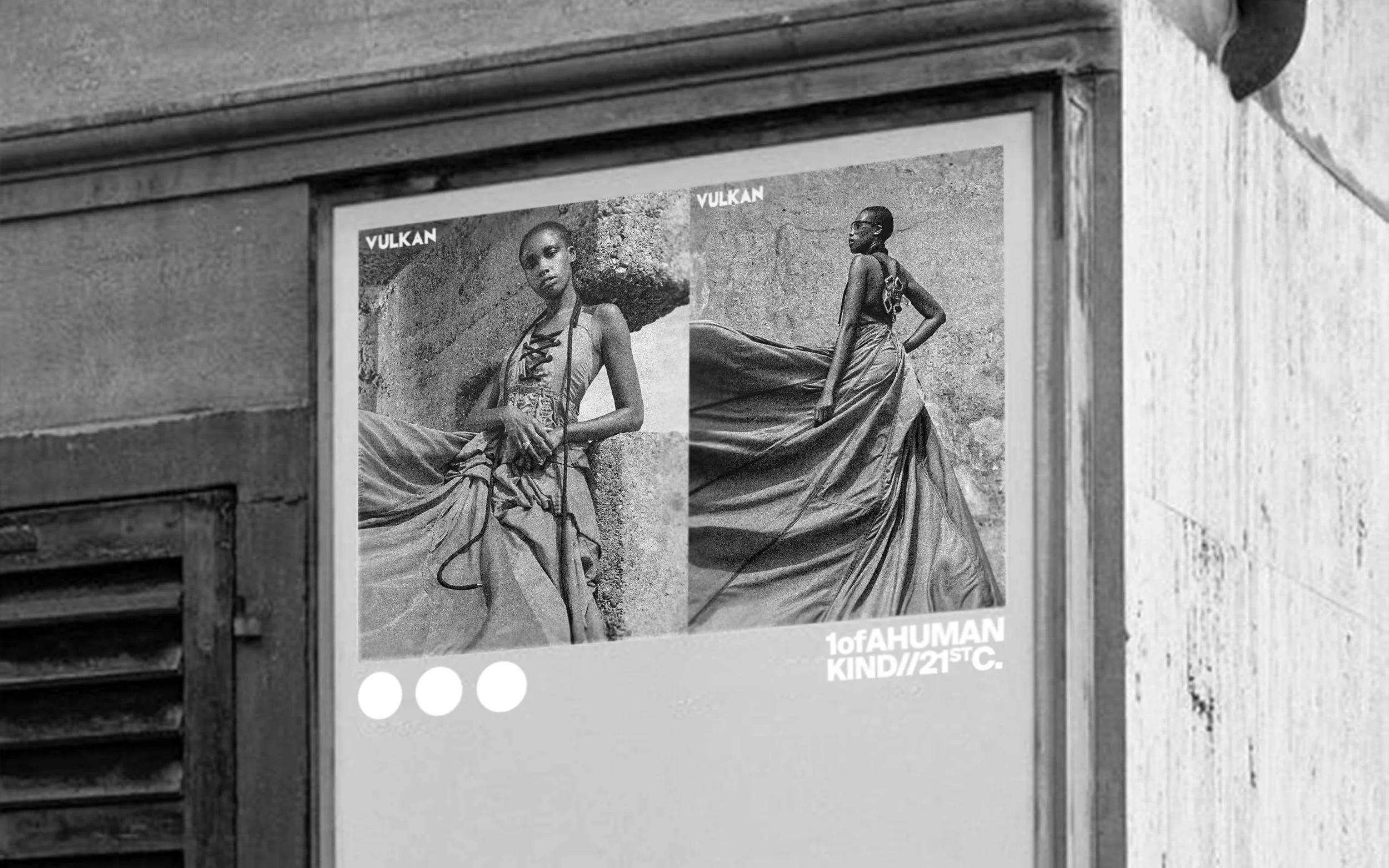
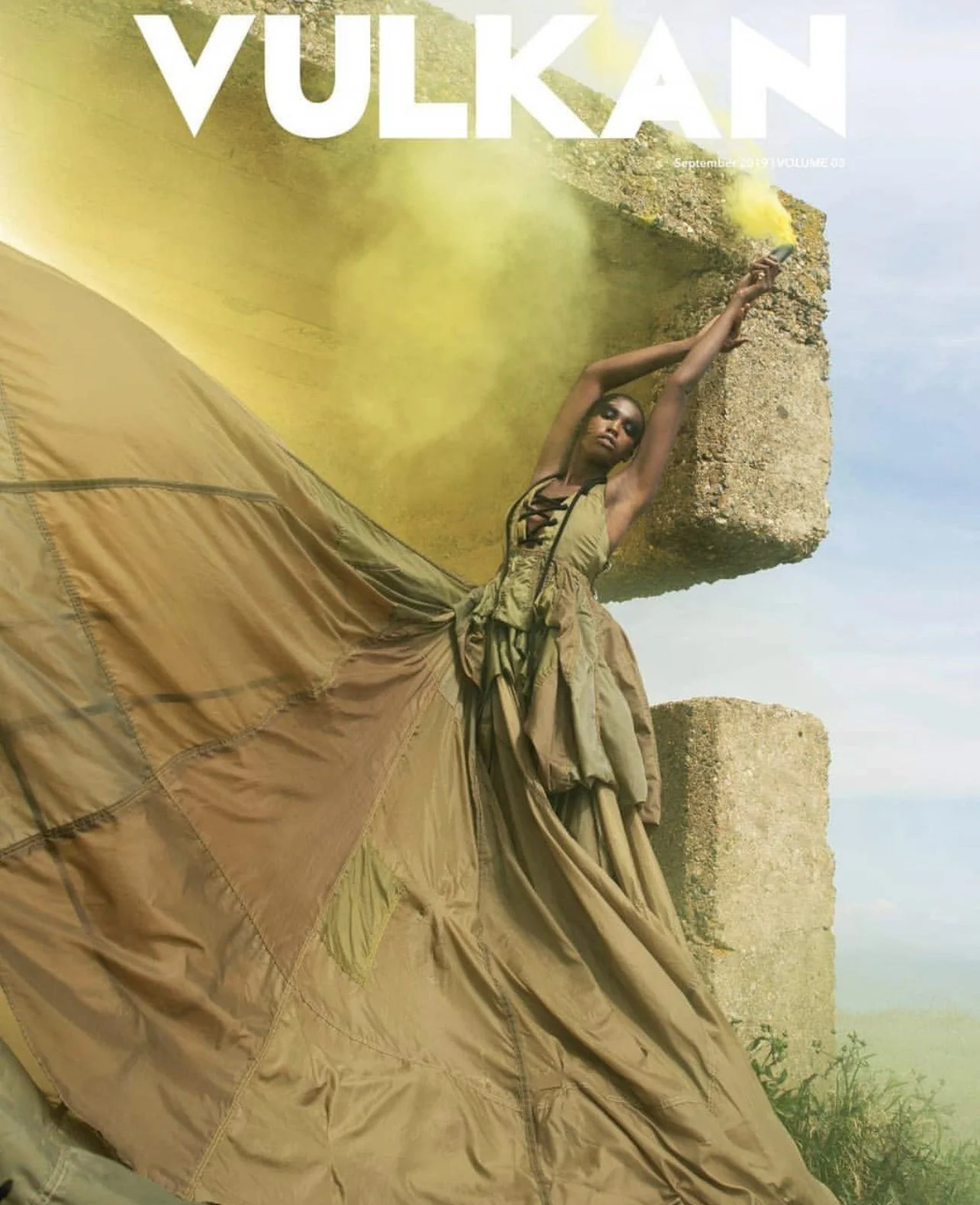
The subsequent VULKAN feature, cover and interior, extended that reach into US editorial distribution and into the fashion readership specifically. The piece remains in storage and has not been worn to a wedding, which leaves the proposition demonstrated, sought after, but ultimately untested on the big day.